Buying Commercial Property on Miami’s 79th Street Corridor
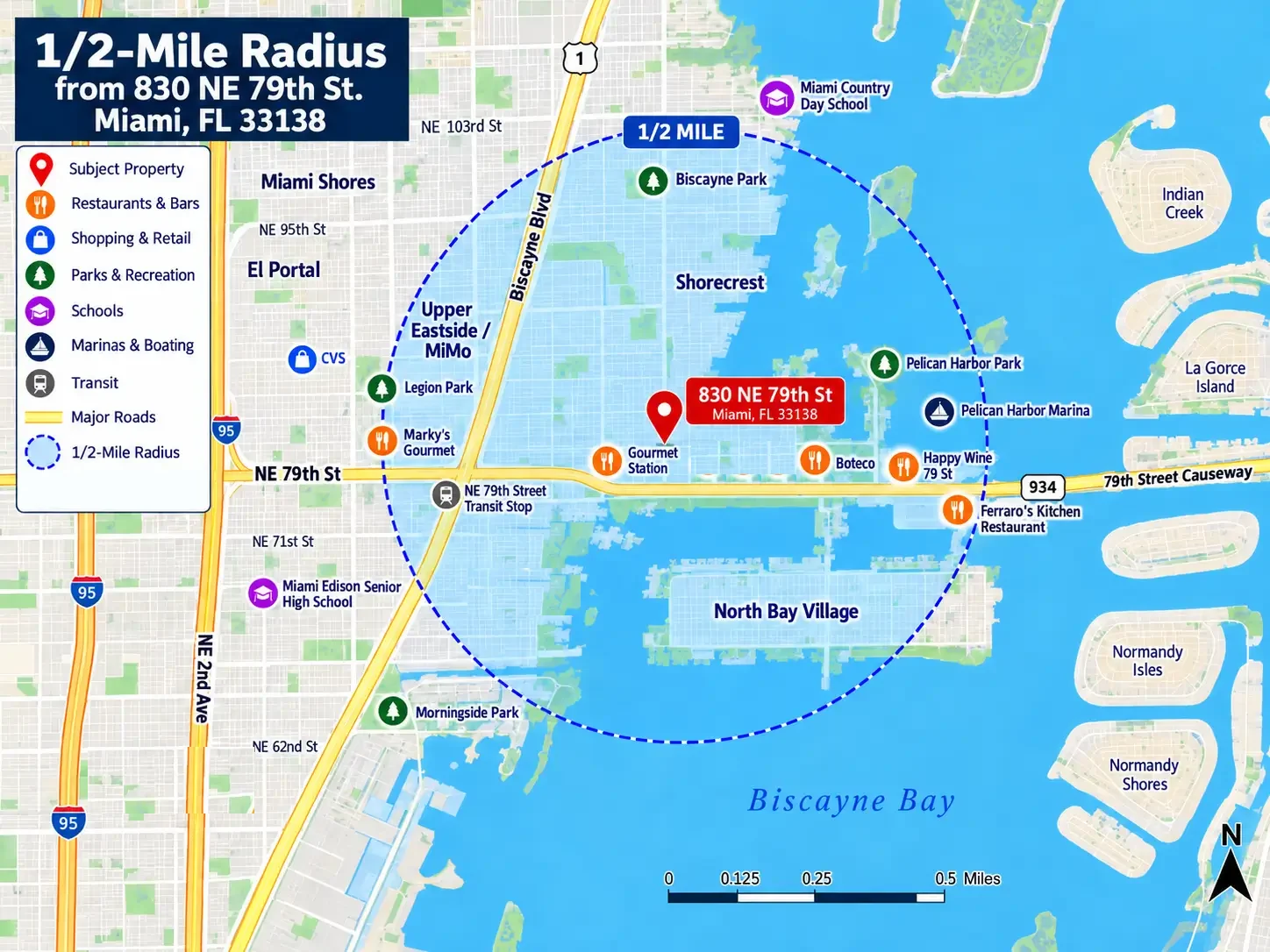
NE 79th Street is one of the Upper Eastside’s main east–west routes, linking I-95, Biscayne Boulevard and the causeway to Miami Beach. If you’re looking at an investment or owner-user property along it, here’s what matters: zoning, use history, due diligence and how deals get done.
Why the 79th Street corridor
Few Upper Eastside streets carry as much traffic as NE 79th Street. FDOT’s 2025 count puts it at about 27,600 vehicles a day between Biscayne Boulevard and N Bayshore Drive. Drivers heading between the mainland, North Bay Village and North Beach all pass through.
The corridor is surrounded by established neighborhoods (Shorecrest, Belle Meade, the MiMo District, Little River and Miami Shores), and 14 ZIP codes sit within five miles. For a business, that means a steady base of nearby customers. For an investor, it means tenant demand from operators who need visibility and access.
Curious what daily life looks like around the corridor? See our guide to things to do near NE 79th Street and the local business directory.
Understanding T5-O zoning
The City of Miami zones land under Miami 21, a form-based code organized into “transect” zones. T5 is the Urban Center zone: mixed-use buildings with retail and office uses alongside rowhouses and apartments, built close to the street.
Each T5 area carries a suffix: R (Restricted), L (Limited) or O (Open). The Open category allows the broadest range of commercial uses of the three. That’s one reason T5-O frontage on a busy corridor is attractive both to operators and to long-term holders.
Zoning tables, uses and approvals change. Always confirm current permitted uses, height and density for a specific folio with the City of Miami Zoning Department before you buy.
Grandfathered automotive uses: why they’re scarce
Many older properties along Miami corridors have operated as auto repair, sales or service businesses for decades. When the code changes, an existing use that no longer matches the new rules may continue as a legal nonconforming (“grandfathered”) use.
That status can be valuable, because opening a new automotive use on many corridors today is difficult or impossible. It also comes with limits. Nonconforming uses generally can’t be expanded freely, and they can lose their status if the use is discontinued for long enough. What to check:
- A zoning verification letter from the City confirming the current zoning and the status of the existing use
- The property’s Certificate of Use history and current business tax receipts
- How long the use has operated continuously, and whether any gaps occurred
- Any Miami-Dade County environmental (DERM) permits that apply to the existing operation
For example, 830 NE 79th St has operated as auto repair and service since 1974 and has been held by the same owner since 1986.
Due diligence for automotive properties
Expect a more thorough review than you would for an office or retail building. Most buyers and lenders order a Phase I Environmental Site Assessment for any property with an automotive history. It’s standard practice and helps you understand the site before closing.
- Environmental: Phase I ESA, and any follow-up the consultant recommends
- Physical: roof, HVAC, drainage, paving, fencing and any service equipment
- Legal and title: survey, title commitment, existing leases, estoppel certificates from tenants
- Financial: rent roll, operating expenses, property taxes and insurance
Leased investment or owner-user?
A leased building gives you income from day one. A vacant one gives you control. On a corridor like 79th Street, a mix can offer both. A building with one long-term tenant and one short lease lets an owner-user collect rent now and move into part of the space later, or lets an investor reposition that section at renewal.
When comparing properties, look at lease terms, renewal options, who pays taxes, insurance and maintenance, and how each tenant’s use fits the zoning.
Using a 1031 exchange
Many buyers on commercial corridors are completing a like-kind (1031) exchange, which can defer capital gains tax when you sell one investment property and buy another. The IRS timelines are strict: you generally have 45 days after selling to identify replacement property and 180 days to close.
An already-leased building can make that timeline easier, because the income is in place on day one. Work with a qualified intermediary and your tax advisor before you list or make an offer.
Buying directly from an owner
Some of the best corridor properties never hit the big listing sites because long-time owners prefer to sell directly. Buying for sale by owner (FSBO) works much like any other commercial purchase:
- Contact the owner and sign a short confidentiality agreement to receive the price, rent roll and lease summaries.
- Tour by appointment, without disturbing tenants.
- Submit a letter of intent (LOI) or a contract prepared by your attorney.
- Your attorney or title company handles escrow and closing, and your lender handles financing.
Buyer’s agents can still represent you in an owner-direct sale. Just tell the seller up front.
Quick buyer checklist
- Zoning verification letter and permitted-use review
- Certificate of Use and business tax receipt history
- Phase I ESA, plus any recommended follow-up
- Survey, title commitment and tenant estoppels
- Rent roll, leases and renewal options
- Insurance quotes, including wind coverage
- 1031 timeline, if exchanging
Looking at the corridor now? 830 NE 79th St is offered for sale by owner. It’s a fully leased, freestanding automotive-use building about three blocks east of Biscayne Boulevard.
Frequently asked questions
What does T5-O mean in Miami zoning?
T5 is the Urban Center transect zone in the City of Miami’s Miami 21 code, intended for mixed-use buildings. The “O” stands for Open, the broadest of the three T5 categories (Restricted, Limited and Open). Confirm permitted uses for a specific property with the City of Miami Zoning Department.
Can I open a new auto repair shop on NE 79th Street?
New automotive uses are restricted in many Miami zones. Properties with a long-standing automotive use may continue as legal nonconforming uses, which makes them scarce. Verify the status of any property with the City before buying.
Is a Phase I environmental report required?
It isn’t legally required for every purchase, but most buyers and lenders order a Phase I ESA for properties with an automotive history. It’s a standard part of commercial due diligence.